
The MenuWise guide to specific diets at restaurants
Keto, vegan, dairy-free, high-protein, low-calorie, low-FODMAP — and what each one means at a real menu.
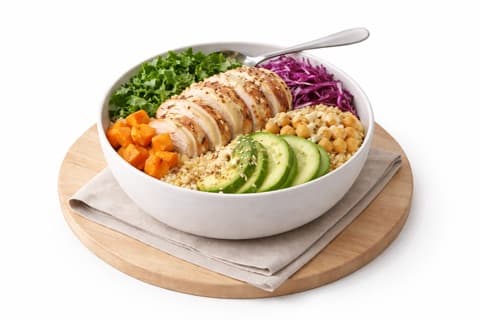
Every specific diet has its own logic at a restaurant. Keto fights carbs hiding in sauces. Vegans navigate fish sauce and bone broth. High-protein eaters chase 40g+ entrees without overshooting on sodium. This guide gathers what we have published per-diet, plus the glossary terms each diet leans on.
Start here
What 'gluten-free' actually means on a restaurant menu remains the most-asked dietary question, and the same principles apply to most other diets: recipe vs kitchen process matters.
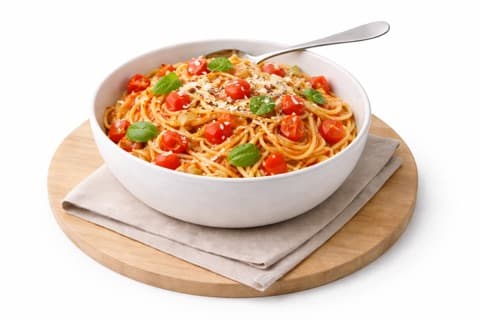
Naturally compatible options
Whole grains that work for keto, vegan, gluten-free, and high-protein at the same time.
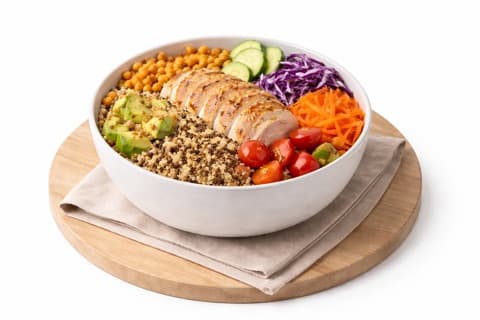
Key terms
Definitions that come up across this topic. Each links to the full glossary entry with examples and related posts.
Frequently asked
- Which cuisine tends to be easiest for vegans at restaurants?
- Indian, Vietnamese, Mediterranean, and Italian (counterintuitively) tend to be the easiest for vegans, because each has multiple plant-forward dishes that are baseline-vegan without modification. Always confirm specifics with the kitchen since fish sauce, butter, and dairy can hide in unexpected places.
- What do macros mean and how do I track them at restaurants?
- Macros are macronutrients: protein, carbohydrates, and fat. Tracking them at restaurants is tricky because portions vary and most calorie counts are generic estimates. MenuWise shows estimated macro ranges per dish rather than false-precise numbers.
- How does MenuWise handle multiple diets at once?
- MenuWise treats each diet as a first-class profile that you can stack. A user with celiac disease who is also dairy-free and tracking high protein gets per-dish scoring that respects all three simultaneously. The scoring engine knows how each interacts.
MenuWise screens every dish for you.
iPhone, iOS 17+. Yearly plan includes a free trial.